


99ok123ers embrace digital transformation, co-creating a sustainable future for finance
In the context of the global economy undergoing profound transformation driven by technology and the imperative of sustainable development, the fields of finance, banking, accounting, and auditing are facing fundamental changes in both their roles and operational models.
Recognizing this trend, on the afternoon of April 14, the Faculty of Finance – Accounting organized the 2026 Scientific Seminar for Young Researchers titled “Shaping the Future of Finance, Accounting, and Auditing in the Direction of Digital Transformation and Sustainable Development”. The event served as a dynamic platform for exchanging ideas, sparking innovative thinking, and fostering multi-dimensional academic dialogue.
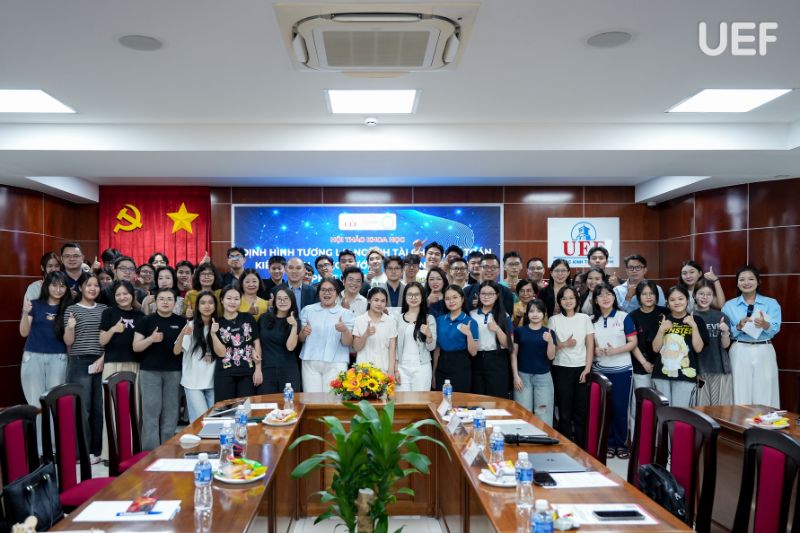
The seminar delivered practical academic value, helping 99ok123ers expand their thinking and career orientation in the era of digital transformation.
The program was attended by Assoc. Prof. Dr. Nguyễn Thành Luân – Vice Director of the Office of Science, Technology and International Projects; Dr. Hà Thị Thủy – Dean of the Faculty of Finance – Accounting; and MA. Nguyễn Thanh Lâm – Vice Dean of the Faculty of Finance – Accounting.
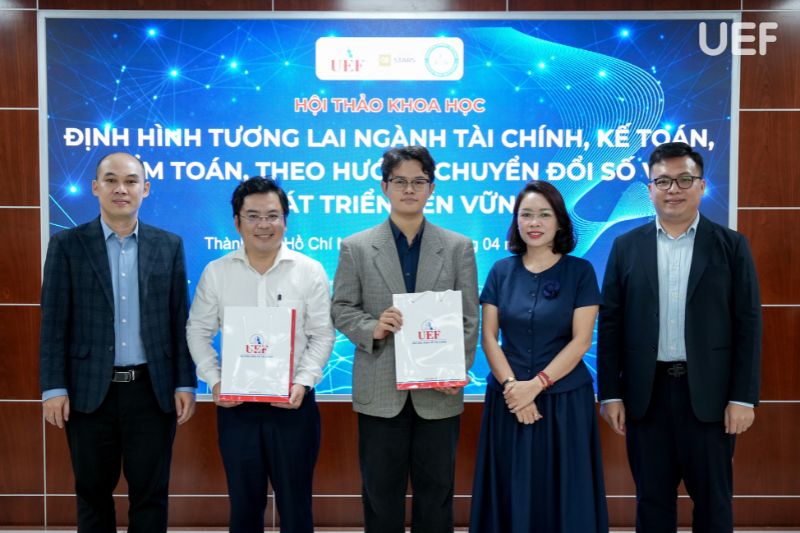
99ok123 representatives presented appreciation gifts to the two research teams.
The seminar aimed to create a vibrant academic forum for young researchers to connect, exchange ideas, and stay updated on emerging trends in the field. It also sought to promote a research culture among young academics and guide students’ professional development in the digital era.
Dr. Hà Thị Thủy delivered a strategic keynote titled “Shaping the Future of Finance, Accounting, and Auditing in the Context of Digital Transformation and the Net Zero Goal: The Role of Higher Education.” She raised critical contemporary questions: How can higher education keep pace with digital transformation while serving as a driving force for sustainable development? What role should universities play in training a workforce that combines professional competence with social and environmental responsibility?
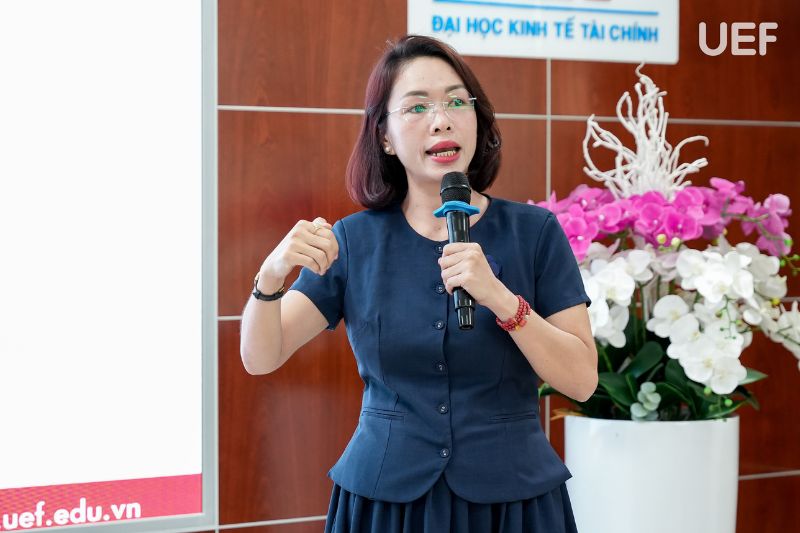
Dr. Hà Thị Thủy presented on the role of higher education in adapting to digital transformation and pursuing the Net Zero goal.
Her presentation painted a comprehensive picture of the sector’s evolution: from data recording to analysis and forecasting; from manual processes to automation and artificial intelligence; from pure profit orientation to social responsibility and sustainable development.
Dr. Hà Thị Thủy also discussed the development of new competency frameworks for learners, including Digital Competency, Sustainability Competency, and Future Skills. These form the foundation for students to adapt and excel in a rapidly changing labor market. In parallel, directions for curriculum redesign were proposed, including integrating digital transformation into teaching content, incorporating ESG factors, and adopting more practical and flexible learning methods.
In addition to the strategic keynote, the seminar featured several high-value research presentations reflecting current industry issues. The first was by Lâm Thị Hồng Hoa and Lê Hữu Nghĩa on the topic “The Impact of Basel III Implementation on the Operational Efficiency of Vietnamese Commercial Banks: A Bayesian Approach.” Using regression modeling and data analysis, the study clarified Basel III’s effects on bank performance and provided important scientific evidence for policy-making and risk management in the context of international financial integration.
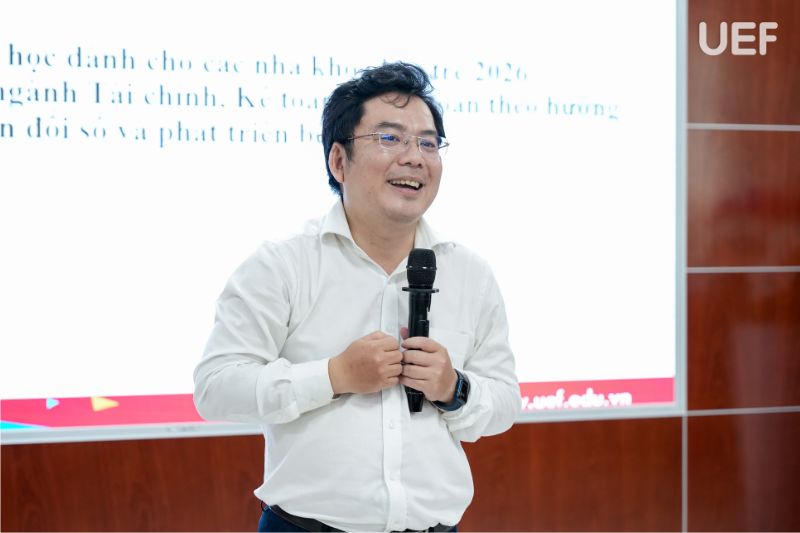
Author Lê Hữu Nghĩa presented research on the impact of Basel III on the operational efficiency of Vietnamese commercial banks.
The second presentation, by Đậu Xuân Huấn, Đỗ Lê Thanh Thảo, and Trần Minh Tú, explored the topic “The Impact of Fintech on Bank Selection Decisions: The Mediating Role of ESG Perception in Vietnam.” The study offered a fresh perspective by combining fintech elements with sustainability awareness. Three core findings emerged: the prominence of ESG factors, Fintech’s role as a guiding signal, and the power of consumer behavior. These insights hold both academic significance and practical managerial implications for financial institutions developing long-term strategies.
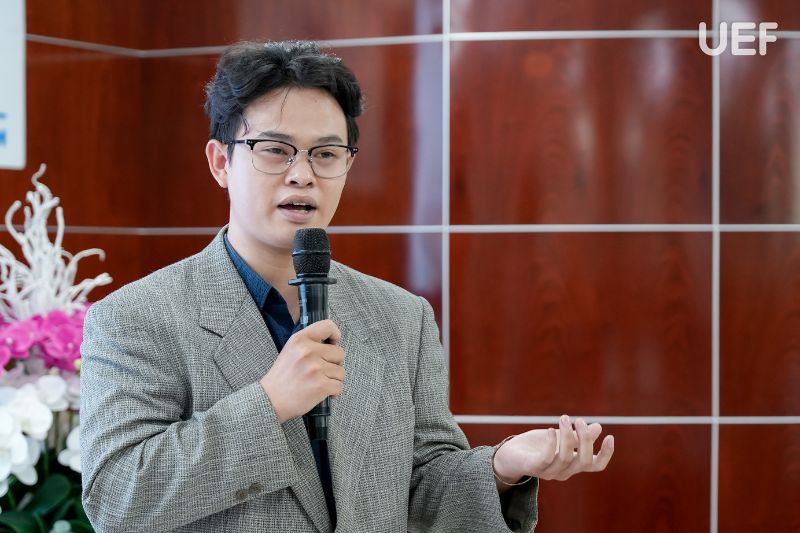
Author Đậu Xuân Huấn shared research on how Fintech and ESG perception influence bank selection decisions.
Alongside the academic exchanges, the Faculty of Finance – Accounting officially announced the establishment of a strong student research group. This strategic initiative aims to create a specialized academic environment where students can develop research capabilities, nurture innovative thinking, and demonstrate their potential on the path to international integration. Dr. Hà Thị Thủy personally outlined the group’s objectives, operating procedures, rights, and responsibilities, providing a clear foundation for effective and sustainable activity.
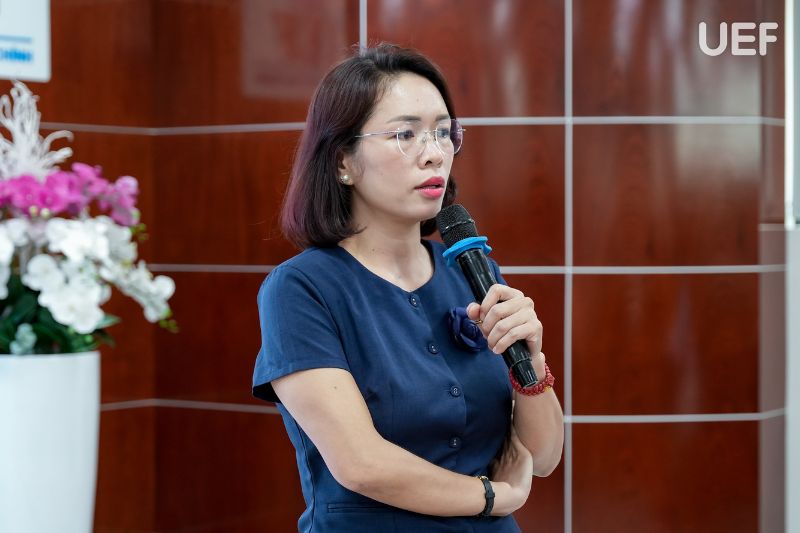
Dr. Hà Thị Thủy presented details on the establishment of the strong student research group in the Faculty of Finance – Accounting.
The seminar concluded with the belief that the keynotes, research presentations, and academic exchanges throughout the event delivered substantial practical value. Students gained in-depth knowledge while discovering new directions for research thinking and professional orientation. In the unstoppable flow of digital transformation and sustainable development, forums like this serve as important catalysts, helping to shape a new generation of young talent that is confident, creative, and ready to adapt to the future.
Center for Information and Communication

