


Faculty Research
Workshop: Idea Discussion And Research Group Formation For FBA Faculty
04/19/2024
Continuing the workshop series "Enhancing Scientific Research Capacity" for faculty members, the Faculty of Business Administration (FBA) organized its second session titled “Idea Discussion and Research Group Formation” on April 12, 2022.
In this special session, the workshop was divided into two distinct parts: Phase 1 – General Meeting & Information Sharing, and Phase 2 – Departmental Discussion & Detailed Research Topic Selection.
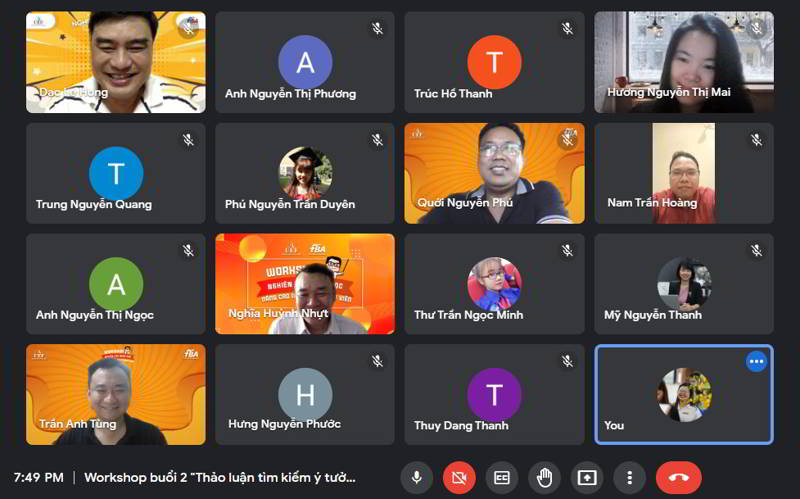
In the general meeting, the Board of Management of the Faculty of Business Administration introduced the significance of the themes, as well as the roles and importance of selecting research topics by specialized groups. Furthermore, the Faculty leaders provided strategic orientations for research topics across the various departments
During the session, Dr. Huynh Nhut Nghia – Vice Dean of the Faculty, emphasized: "In 2022, all FBA faculty members are determined to complete at least one scientific research project. This will serve as a foundation for higher-level research projects. The Board of Management looks forward to the active participation and sharing of all faculty members so that we can collectively produce effective research outcomes."
Immediately following, Phase 2 took place in separate breakout rooms for each department. In the Marketing Department, Mr. Le Hong Dac (M.A.) – Head of Department, presented the topic: "Factors Influencing the Intention to Use and Purchase Electric Motorcycles in the Ho Chi Minh City Market." According to Marketing faculty members, the electric motorcycle market is currently a highly promising sector. While Vinfast’s plant capacity is 500,000 vehicles per year, the market share last year saw monthly sales of only around 10,000 units. Meanwhile, total motorcycle sales in the market last year grew by 2.7%, yet the electric segment remained under 5%. Despite rising fuel prices and the environmental benefits of electric motorcycles, adoption remains low among the general Vietnamese population, particularly in HCMC. Consequently, this topic has emerged as a key research focus for the Marketing faculty.
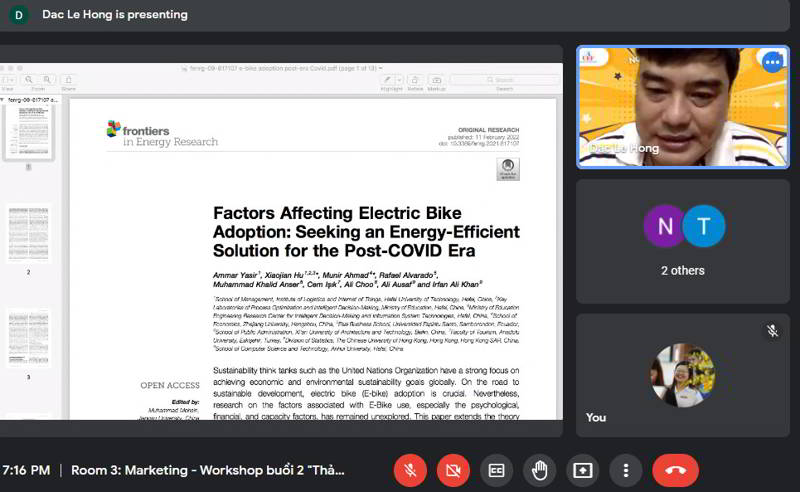
Faculty members of the Marketing Department discussing research topics
In the Business Administration department's session, moderated by Mr. Tran Anh Tung (M.A.) – Head of Department, the faculty developed a topic regarding "Apartment Purchasing Intentions relative to Income Expectations of Gen Z in Ho Chi Minh City." Notably, the Business Administration team is adopting the Binary Logistic Regression model. Instead of traditional Likert-scale surveys, this method utilizes a "Yes/No" questionnaire format regarding expected income. The Logistic Regression model will primarily be used for forecasting rather than mere hypothesis testing, representing a relatively modern approach. While many studies exist on Gen Z consumer behavior, this method aims to validate the trend that Gen Z is moving away from the traditional "settling down" mindset; instead, they tend to prefer renting to allocate funds for travel and personal development.
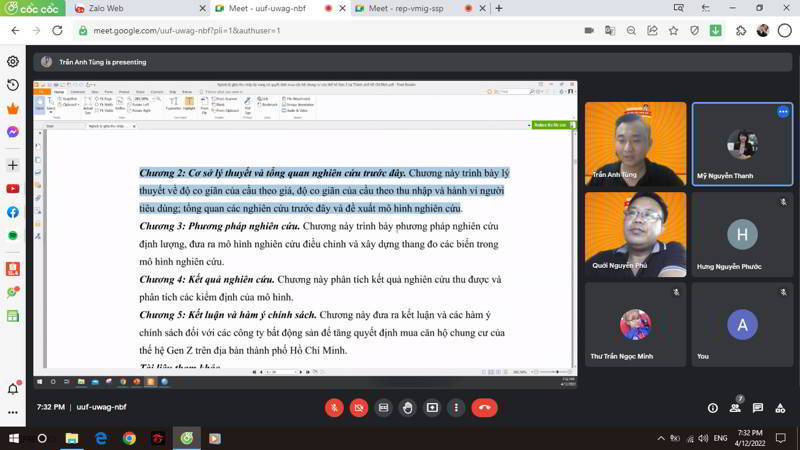
The Business Administration Department engaging in a dynamic discussion on distinctive research methodologies
The Human Resources Management (HRM) team also proposed a vital topic: "Digital Transformation Solutions to Enhance Teaching Quality for Training Programs at 99ok123." This topic is essential as it aligns with the HRM discipline, providing insights into the innovations brought about by digital technology integration. Additionally, Ms. Dang Thanh Thuy (M.A.) – Head of Department, introduced further topics such as "Factors Influencing Online Training Activities" and "Internal Corporate Communications."

A wide range of ideas proposed by faculty members of the Human Resources Management Department
The workshop “Idea Discussion and Research Group Formation” provided FBA faculty members with a platform to generate new ideas, share perspectives, and reach a consensus on suitable research topics. These efforts serve as vital "links" in contributing to the enhancement of educational quality for the Faculty of Business Administration and the University as a whole.
PHUONG ANH – THUY TIEN
RELATED NEWS

